

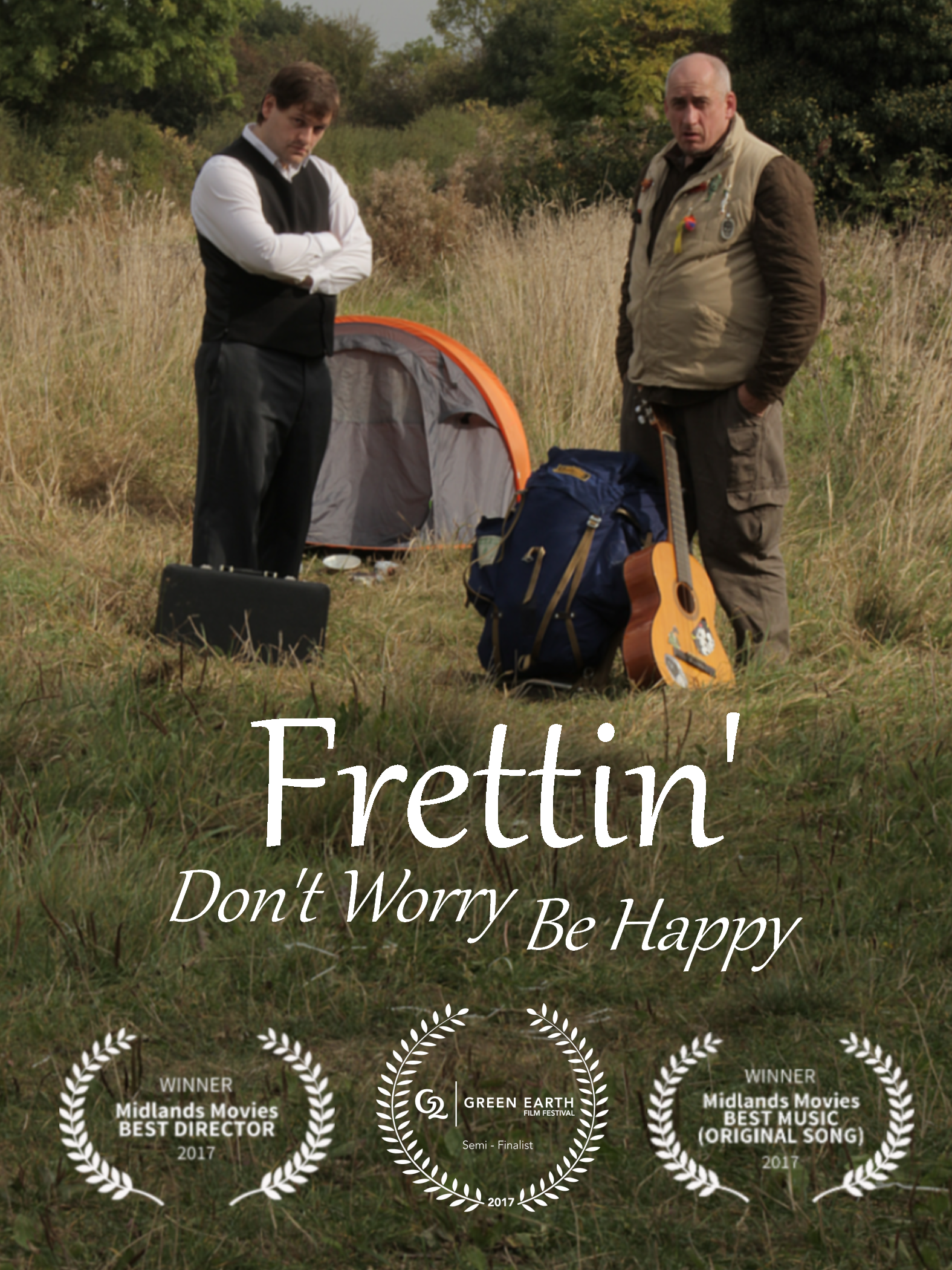
About Frettin’ (2017)
Director: Lee Price
Genre: Comedy / Drama
About the Director
Lee Price is a British independent filmmaker whose work focuses on character-driven storytelling and intimate, low-budget productions. As both writer and director of Frettin’, Price embraces a stripped-down, observational style that prioritizes dialogue, atmosphere, and authenticity over spectacle. His filmmaking reflects the spirit of grassroots independent cinema, relying on minimal resources to tell grounded, human stories. With an estimated budget of just £500, Frettin’ showcases Price’s commitment to creative storytelling within tight constraints. His approach highlights emotional vulnerability and subtle humor while exploring unconventional paths to healing and connection.
Film Synopsis
Frettin’ follows two social outcasts who form an unlikely bond while attempting to live off the grid. As they navigate isolation and survival outside mainstream society, each must confront personal ghosts and unresolved emotional wounds. Blending dry British humor with quiet reflection, the film offers a gentle yet introspective look at alternative living, friendship, and the search for peace after life’s setbacks. Set in rural Leicestershire, the story unfolds at a deliberate pace, allowing character development and atmosphere to drive the narrative.
Tagline: “Don’t worry. Be happy.”
About Frettin’
The tone and structure of Frettin’ suggest a clear creative intention: to explore themes of alienation, healing, and unconventional companionship through understated humor and realism. The film’s off-grid setting serves as both physical backdrop and metaphor for stepping outside societal expectations in order to rediscover purpose.
Awards & Recognition
Independent Gem Status: The film is frequently cited by audiences as an "absolute gem" of independent cinema, particularly for its storytelling and character depth.
Streaming Success: It gained a second wave of recognition after its release on Amazon Prime Video in 2020, where it was praised for its "wonderful storytelling" and "insight into an alternative way of living".
Critical Reception: Reviewers have noted the film's "clever" and "sensitive" approach to difficult subjects, highlighting it as a standout example of low-budget, quirky British filmmaking that avoids traditional blockbuster tropes.